
Have you ever looked at microneedling before and after photos and wondered if the treatment actually works in real life? From reducing acne scars and fine lines to improving skin texture, skin barrier and glow, microneedling has become one of the most talked-about skincare treatments today. But while the result images can be impressive, it is very important to set realistic expectations. Your skin will not transform overnight, and outcomes often depend on factors like skin type, consistency, and aftercare. In this article, we’ll explore microneedling before and after results, what changes you can expect over time, and whether the treatment is truly worth it for your skin goals.
What Does Microneedling Before And After Actually Look Like?
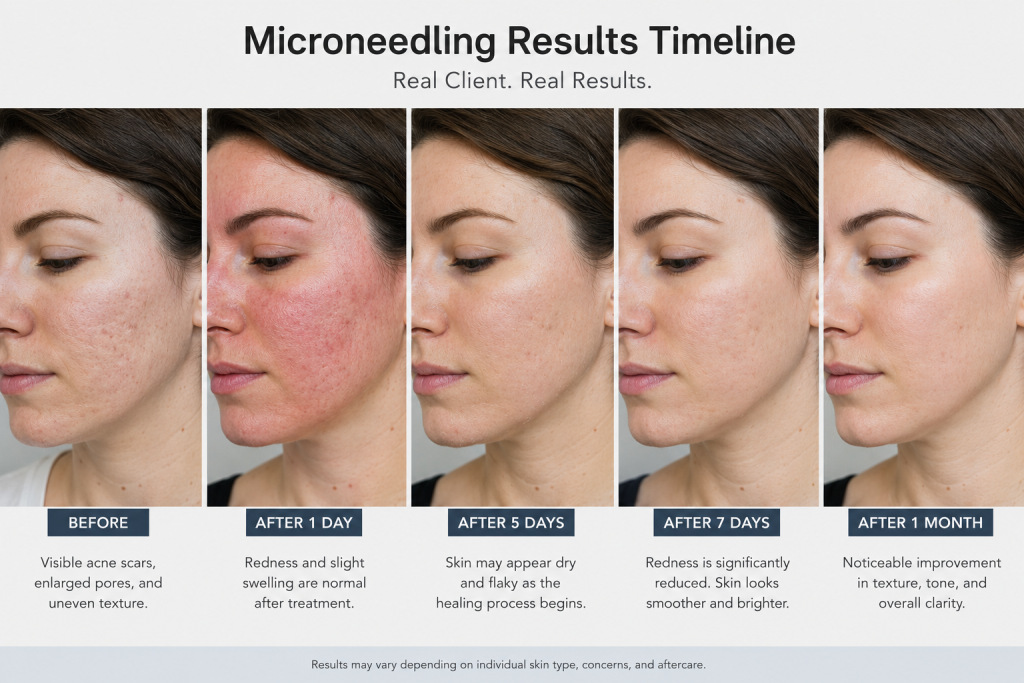
While images show instant results, proper aftercare is essential to support your skin’s healing and help you feel confident in achieving the best possible outcome.
Before treatment
The skin appears uneven in texture, mild acne scars are visible, enlarged pores and dull and uneven tone. Some individuals have irregular skin surface with small depressions and roughness.
1 day after
Immediately after the microneedling, there is redness (erythema), mild swelling, and the skin feels warm and tight. This might happen due to controlled injury response. Texture becomes more prominent temporarily due to inflammation. Platelets, growth factors, and cytokines send signals to call immune cells (neutrophils and macrophages). This stage is why skin appears red and slightly swollen immediately after treatment.
3 days after
After 2 to 3 days, redness subsides, and skin starts to feel smoother; that’s why it is also known as the proliferation phase. Fibroblasts, which are the key collagen-producing cells in the skin, are activated by growth factors. Skin may still appear slightly dry.
5 days after
There is a reduction in redness. Skin looks more even in tone, but collagen changes are still early-stage. One might see the first phase of mild refreshments.
1 week after
After 7 days, Type III collagen is gradually replaced by stronger collagen type I, and skin texture begins to appear smoother, and pores become refined. Skin feels firmer and more hydrated as the healing response stabilizes.
One month After Treatment
Matrix metalloproteinases (MMPs) help break down damaged collagen while new fibers are laid down in a more organized structure. There is improved elasticity in skin, fine lines and wrinkles may reduce, and skin appears smooth and youthful.
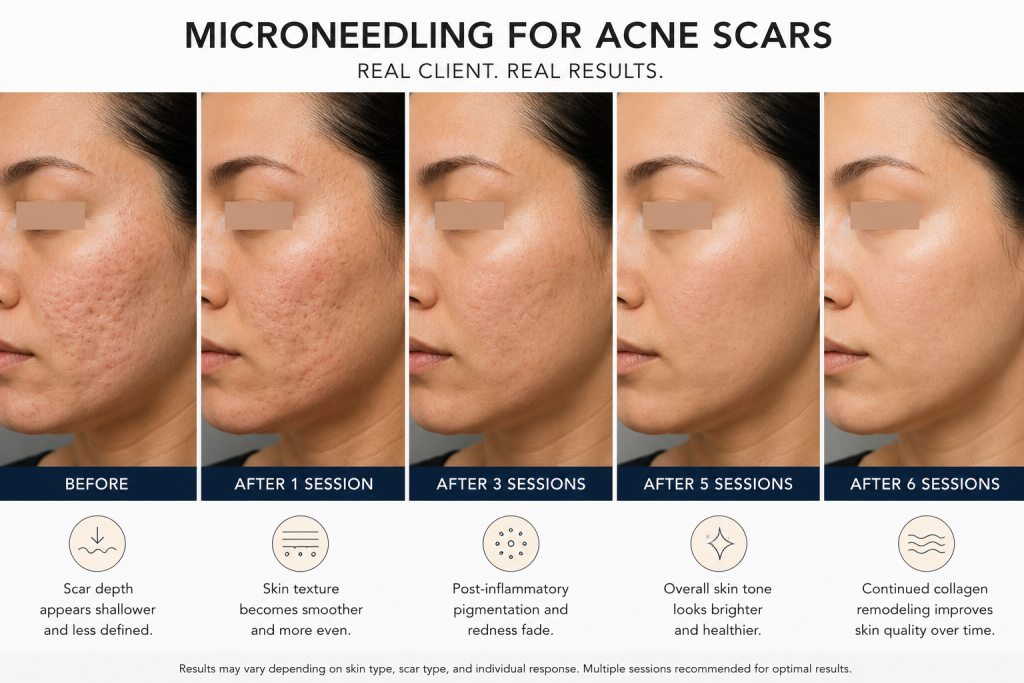
Moetaz El-Domyati, MD from the Department of Dermatology, Al-Minya University, Al-Minya, Egypt, published research that shows that multiple minimally invasive skin treatment such as microneedling, are an effective treatment for post-acne atrophic scars. It stimulates the repair processes with the advantage of being a relatively risk-free, in-office procedure with minimal patient recovery time.
Neelam A. Vashi, M.D., associate professor of dermatology, director of the Boston University Center for Ethnic Skin and director of the Cosmetic and Laser Center at Boston University School of Medicine, states:
“I use microneedling to help ameliorate the signs of atrophic acne scars,” Dr. Vashi says. “I use this treatment because microscopic injuries to the skin help with collagen production and a reduction in signs and symptoms. There is relatively little downtime with this procedure, and it is well-tolerated by all skin types.”
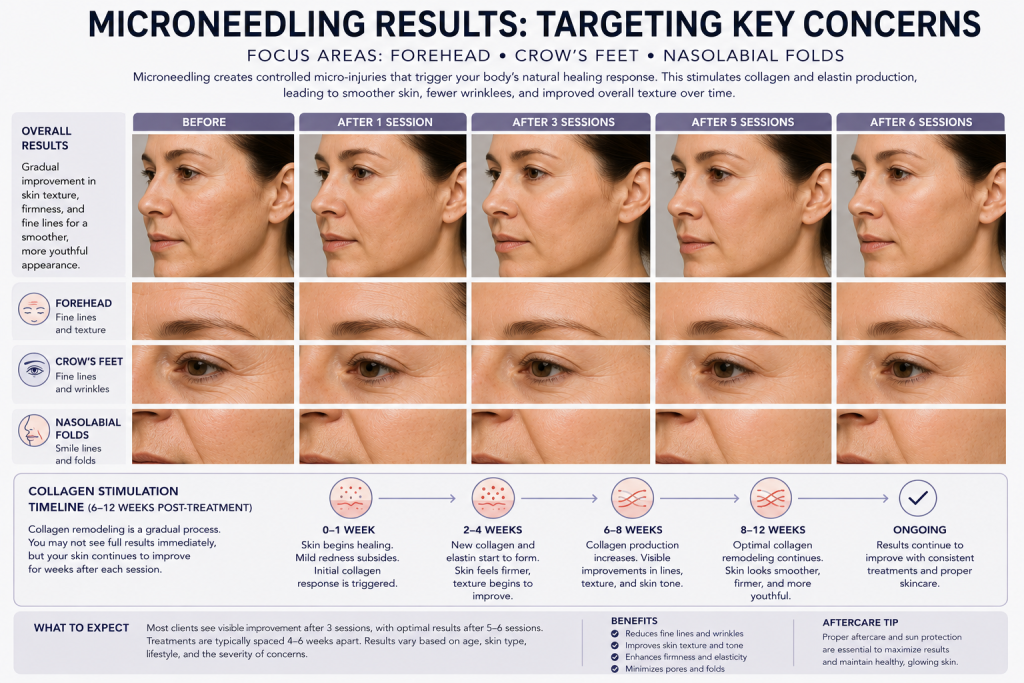
Collagen production decreases as we age. With continuous sun exposure and environmental stress, the skin slowly loses its ability to remain tight, leading to wrinkles, fine lines, and dull texture. Furthermore, the skin under and around the eyes is among the thinnest on your body. This thinness means it loses moisture faster and shows signs of fatigue and aging more readily than other areas. Furthermore, the constant movement from smiling, squinting, or laughing adds to the formation of fine lines often called crow’s feet. Around the mouth, similar repetitive movements contribute to what are known as smile lines or lip wrinkles.
After a microneedling procedure, the tiny controlled micro-injuries in the skin start a natural response by increasing blood flow, oxygen, nutrients, and growth factors to the treated area. This process is similar to how the skin heals after a minor cut, but in a much more controlled and superficial way that stimulates regeneration without causing significant damage or scarring. As healing progresses, fibroblast cells in the deeper layer of skin produce new collagen and elastin. These are the structural proteins that keep skin firm, smooth, and elastic. This collagen induction therapy works best for eye wrinkles, wrinkles around the mouth, fine lines under the eyes, and more. Unlike other treatments that add volume or temporarily freeze muscles, microneedling works to improve the skin’s structure from within.
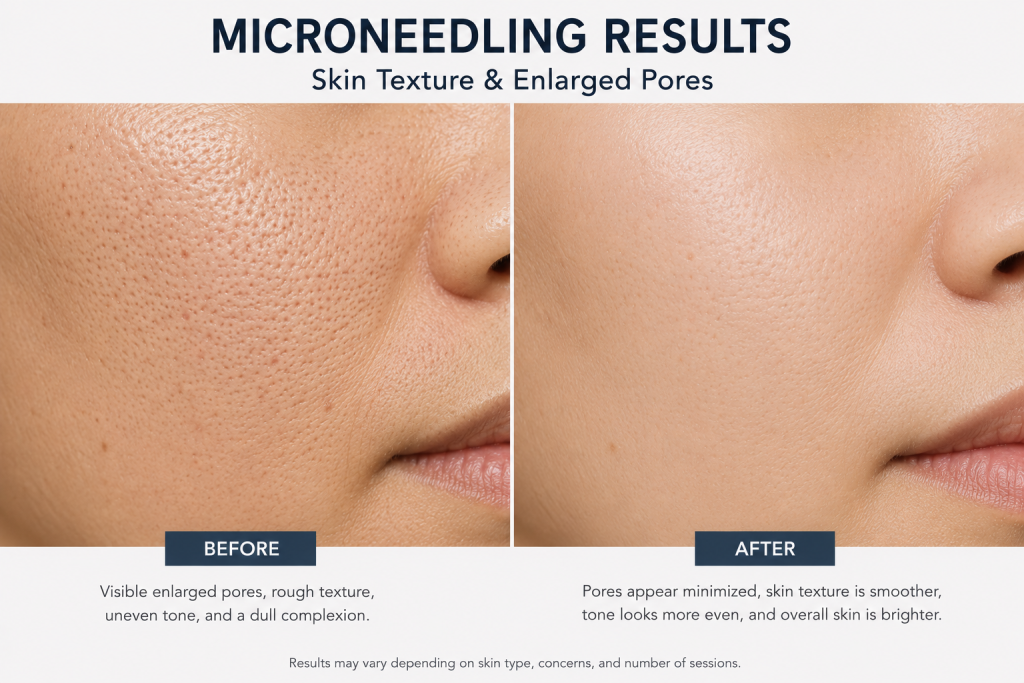
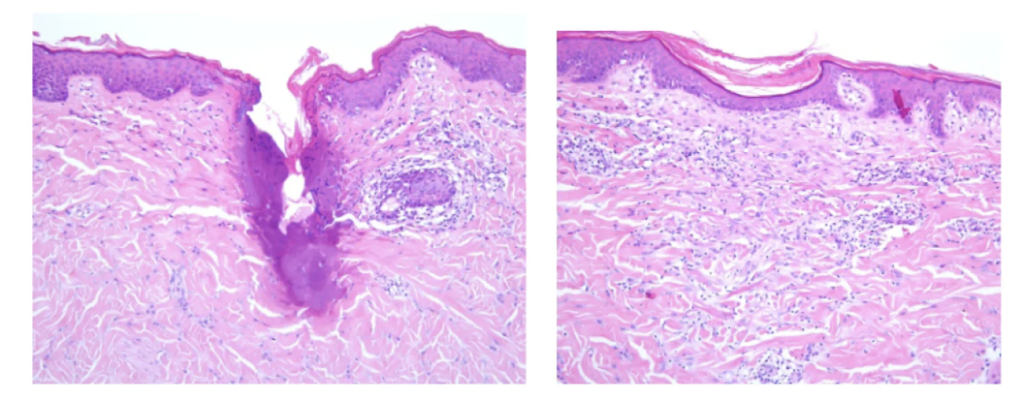
Enlarged pores and uneven skin texture are associated with reduced collagen density, leading to excess sebum production and structural damage to the skin. With microneedling, the stronger dermal matrix helps in reducing the pore visibility by improving skin firmness and elasticity. Clinically, patients often experience smoother skin texture, reduced surface irregularities, and more uniform light reflection, which leads to refined and healthier-looking skin. Histological improvements continue for several weeks after treatment, with textural changes commonly observed between 6 and 12 weeks after the procedure.
Before and After Hyperpigmentation Dark Spots
Microneedling for pigmentation and uneven skin tone typically produces slower and less dramatic results compared to acne scar treatment.
Collagen remodeling improves skin quality, but pigment-related concerns, such as post-inflammatory hyperpigmentation or melasma, respond slowly with multiple treatments. Most patients require an average of 6–8 sessions to see improvement inthe tone and texture of their skin. However, certain other factors should also be considered while dealing with hyperpigmentation.
How are the before and after results measured?
Do you know? Microneedling shows significant efficacy in improving acne scars when compared to chemical peels and laser treatments.
Let’s talk about how the results are measured. Common microneedling before and after assessment tools include photographic analysis, clinical scoring systems, and skin biopsies. Before-and-after photographs are frequently compared to assess improvements in skin texture, tone, and the appearance of scars or wrinkles.
- Standardized scales such as the Vancouver Scar Scale (VSS) or the Global Aesthetic Improvement Scale (GAIS) quantify changes in skin conditions.
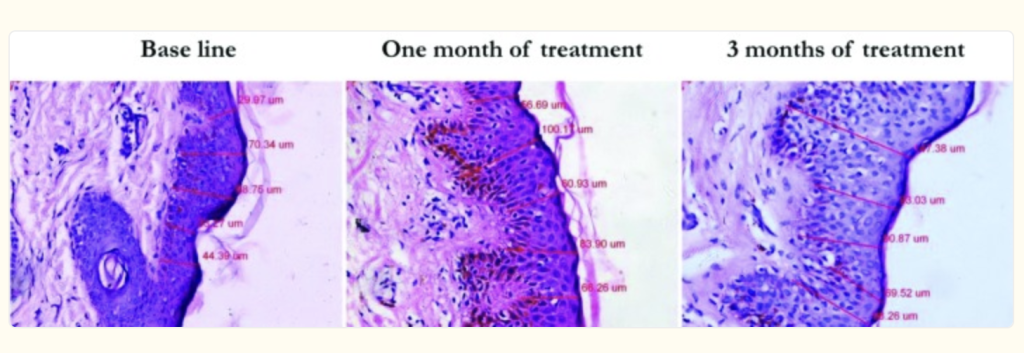
- Skin biopsies measure collagen density and histological changes after the treatment.
- Patient-reported outcomes (PROs) also provide valuable data for the results of treatment.
Microneedling Vs PRP Microneedling: The Results
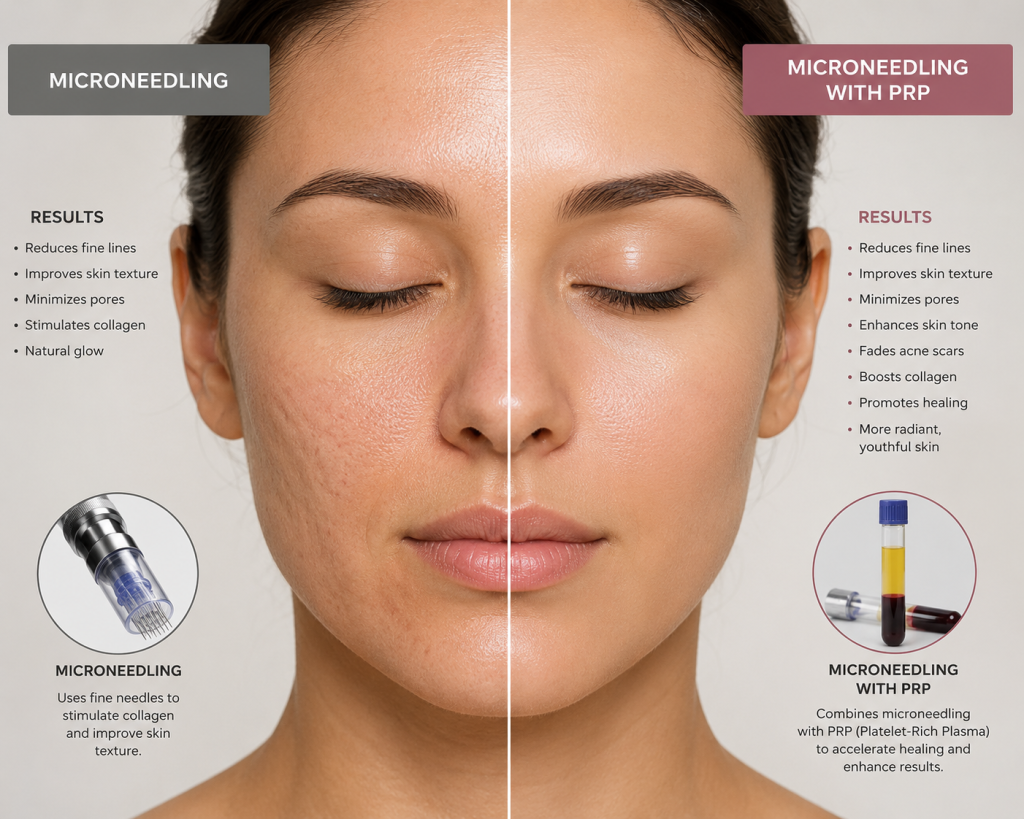
Searching for which microneedling has better before-and-after results? Conservational or with PRP? Well, in terms of results, standard microneedling produces slow improvement in acne scars, skin texture, fine lines, and pores over multiple sessions, with visible changes typically after 4–6 weeks and results after 3–6 treatments. On the other hand, PRP microneedling gives faster and stronger outcomes, as the plasma rich in platelets is directly induced into the skin. It improves acne scars and skin quality, with noticeable glow and texture improvement often seen within 2–4 weeks.
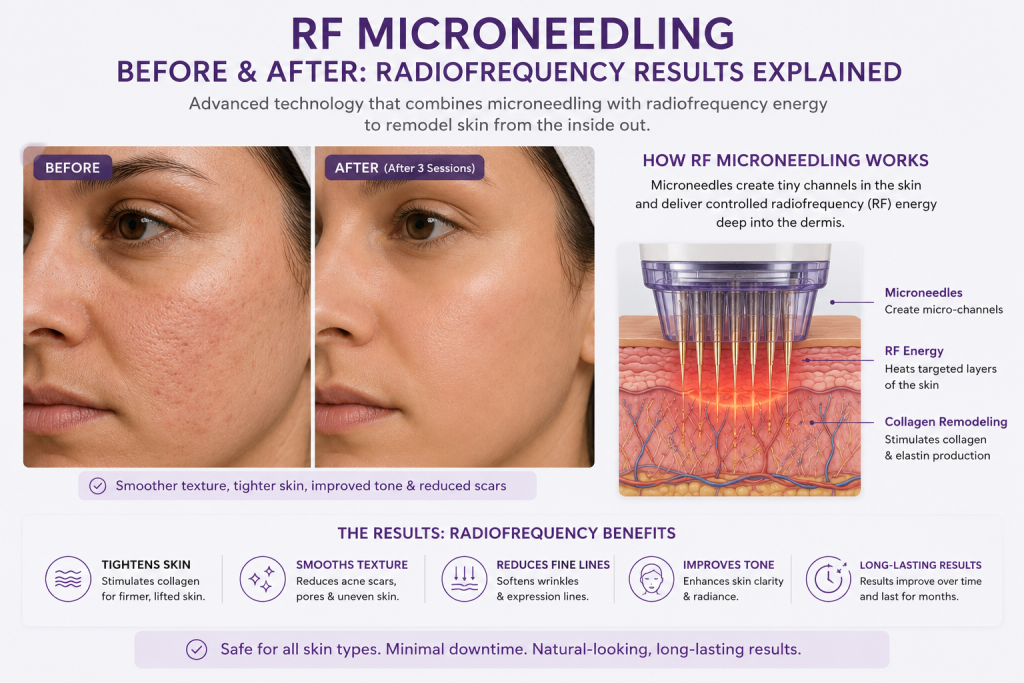
RF microneedling (“radiofrequency microneedling”) combines microneedling with controlled heat energy delivered into the deeper layer of skin. While standard microneedling works by creating micro-injuries that stimulate collagen and gradual skin repair, RF devices add radiofrequency thermal energy, which heats deeper tissue layers. This heat causes immediate collagen contraction and vasodilation, thus increasing the blood supply to the skin and resulting in stronger remodeling and tissue tightening.
RF microneedling vs standard microneedling: which has better before and after results?
| Feature | Standard Microneedling | RF Microneedling |
| Main mechanism | Micro-injuries → natural collagen induction | Micro-injuries + radiofrequency heat → collagen + tissue tightening |
| Best for | Acne scars, texture and early fine lines | Skin laxity, deeper wrinkles, acne scars, jawline tightening |
| Before/after change | Gradual smoothing and texture improvement | More visible tightening + lifting + texture improvement |
| Wrinkle improvement | Mild to moderate | Moderate to significant (especially deeper lines) |
| Overall result quality | Good for surface-level renewal | Better for “lifting + resurfacing” combined results |
Qure microneedling: what makes it different and what results can you expect?
Qure microneedling or microneedling at home is considered an “entry-level/cosmetic maintenance” procedure. It helps to improve hydration, surface texture, and skin reflection, especially with consistent use. Still, it does not reach the depth or intensity of clinical microneedling or RF-based systems like Morpheus8 or Sylfirm X.
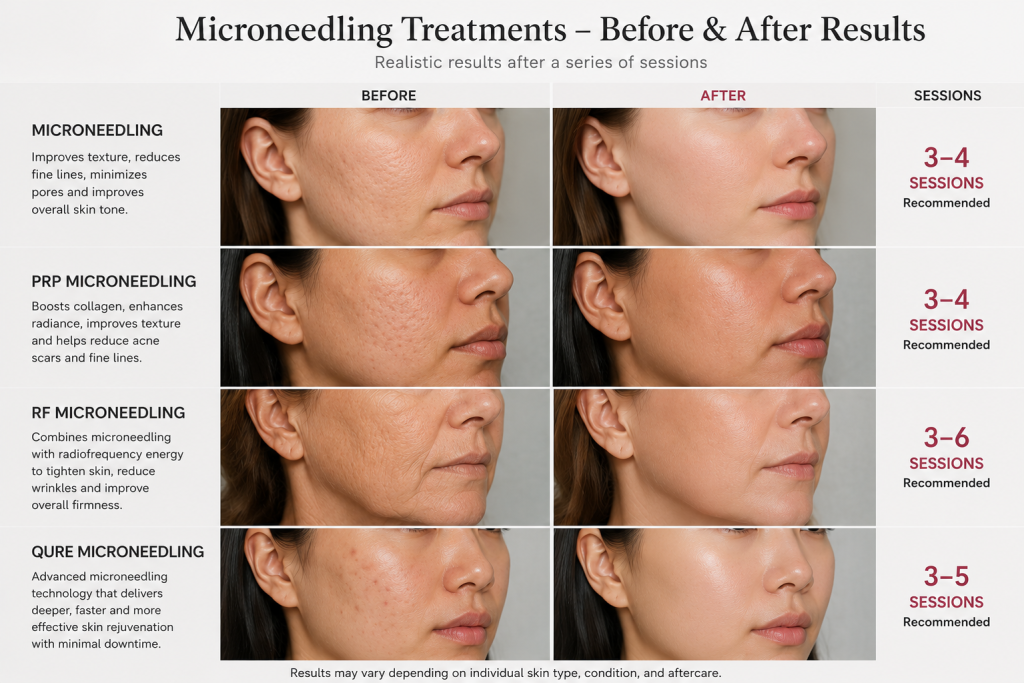
Microneedling can be a good option if you’re dealing with mild to moderate acne scars, uneven skin texture, early fine lines, enlarged pores, or stretch marks and are looking for gradual, collagen-based improvement. It works best when you understand and compare that microneedling before and after results are progressive, not immediate, and usually require multiple sessions spaced several weeks apart.
What you need to do next:
- Start with a skin assessment at Kulanispa
- Choose the right technique for faster recovery and better results.
- Plan realistically.
- Avoid at-home overuse.
FAQs
Q1: How to find the best microneedling near me?
Skin is a matter of sensitive concern, and when searching for a clinic, look for:
- licensed medical professionals or experienced aesthetic providers
- A professional consultation
- Clear discussion and guidance about downtime, risks, and expected results
- Sterile and medically recognized devices
- Realistic timelines instead of “instant results” claims
Kulanispa in McDonough, GA, is one of the microneedling providers that evaluates your skin properly, uses evidence-based protocols, and creates a treatment plan that meets your goals and skin type.
Q2: What should I avoid before and after a microneedling session?
Before treatment
Avoid:
- Retinol, AHAs/BHAs, and exfoliants for 3–5 days
- Sunburn or excessive sun exposure
- Waxing, harsh facials, or scrubs
- Blood-thinning supplements/medications (if medically approved)
- Treating active acne or skin infections
After treatment
Avoid for 24–72 hours:
- Direct sun, heat, saunas, and intense workouts
- Makeup for at least 24 hours
- Retinol, acids, and strong skincare products
- Touching or picking the skin
- Swimming pools and chlorinated water
