
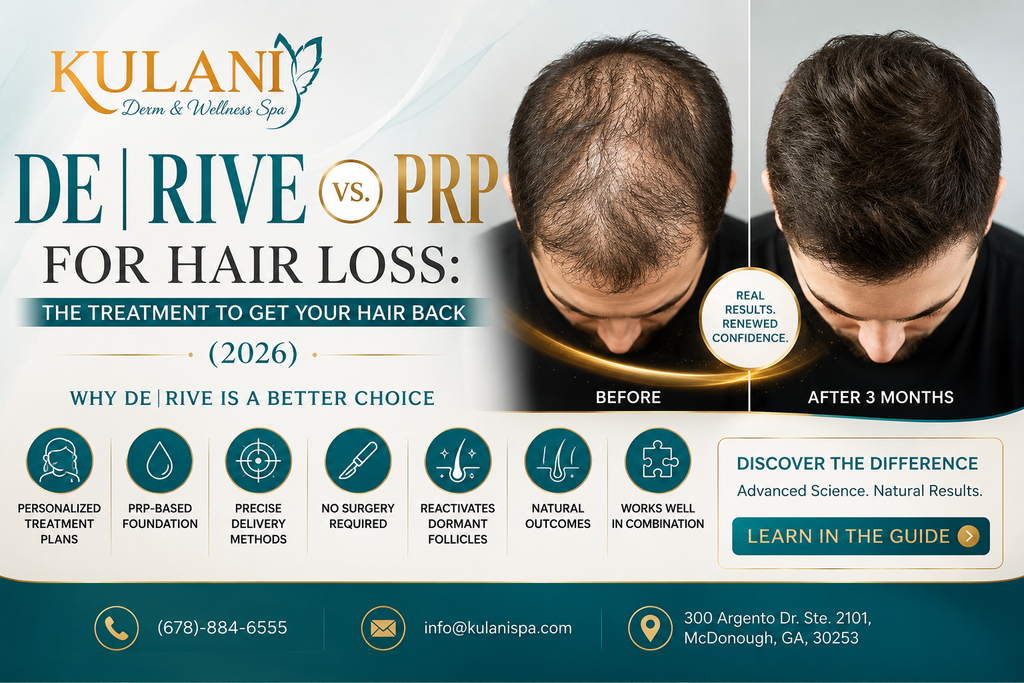
Medical disclaimer: This article provides general educational information and is not a diagnosis or individualized treatment recommendation. Hair loss can have multiple causes, and a qualified healthcare professional can assess the appropriate evaluation and treatment options.PRP and microneedling have been evaluated in clinical research for androgenetic alopecia. De|Rive is a newer product, and independent clinical evidence specific to the product may be more limited. Manufacturer descriptions of ingredients or proposed mechanisms should not be interpreted as proof of treatment effectiveness or guaranteed hair-growth results.
If you’ve been searching for “PRP for hair loss near me” at 11 p.m. while running your fingers through a part that’s gotten a little too wide, you’re not alone, and you’re not overreacting. Hair loss is one of those things that quietly chips away at confidence long before anyone else notices it.
Fortunately, Non-surgical hair-loss treatments such as PRP and newer options such as De|Rive are increasingly discussed by people looking for alternatives to surgical hair restoration. These treatments are available as non-surgical options at some medical and aesthetic clinics, including KulaniSpa, although treatment protocols, costs, and downtime vary.
This article will explain exactly what PRP microneedling is, how it compares to newer options like De|Rive hair restoration, what the research actually shows, what a session at a med spa looks like, and how to decide what’s right for you. No fluff, no miracle-cure promises just what’s backed by evidence and what to realistically expect.
Why Hair Loss Happens in the First Place
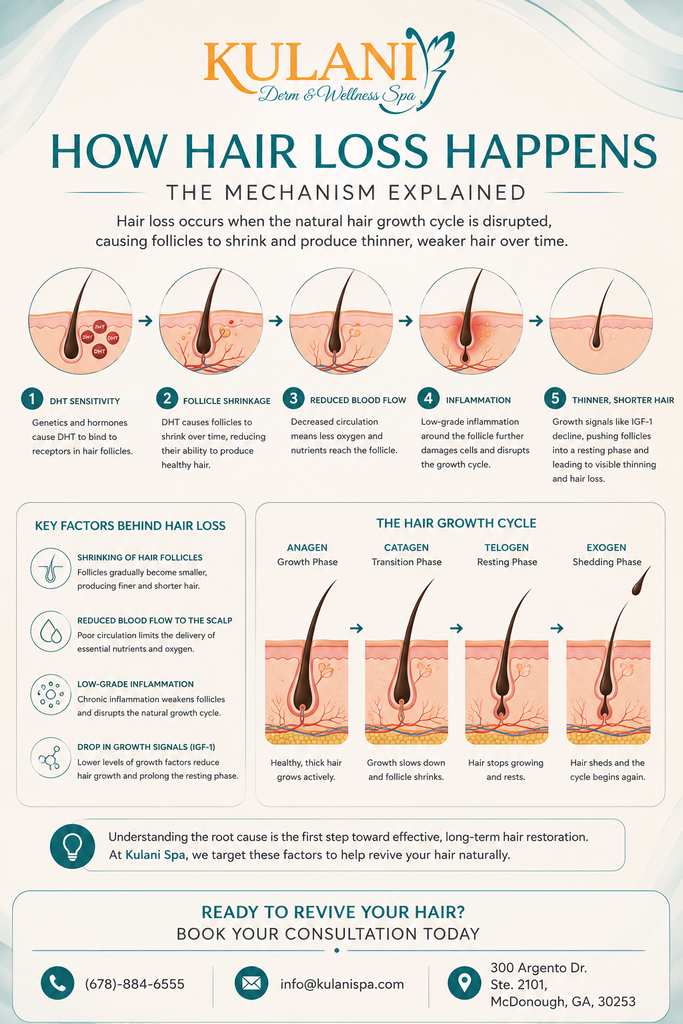
Before jumping into treatments, it helps to understand what you’re actually fighting. Androgenetic alopecia is one of the most common causes of hair thinning and hair loss patterns in both males and females. According to research analysis, it affects around half of men and roughly one-third of women at some point in their lives, with teenage years as the average age of onset in recent years.
The condition isn’t just cosmetic. It’s driven by several factors, such as
- Shrinking of hair follicles
- Reduced blood flow to the scalp
- Low-grade inflammation
- Drop in growth signals like IGF-1
All of these contribute to shortening the hair’s active growth phase and eventually shrink follicles to the point they stop producing visible hair.
Other common factors include:
- Hormonal imbalance: postpartum, hyper- or hypothyroidism, menopause, PCOS
- Telogen effluvium: stress-triggered hair shedding, often 2–3 months after a triggering event such as chemotherapy
- Nutrient deficiencies: iron, vitamin D, zinc, protein
- Genetics: the single biggest predictor of pattern hair loss
What Is PRP for Hair Loss?
Platelet-Rich Plasma, abbreviated as PRP, is a treatment that uses your own blood cells to encourage hair regrowth. A small blood sample is drawn, kept in a centrifugal machine to separate and concentrate the platelets, and then reintroduced into the scalp either by injection, through microneedling, or both.
Platelets aren’t just for clotting. They’re loaded with growth factors PDGF, VEGF, and IGF-1- among them, that signal dormant or weakened hair follicles to wake back up, extend their growth phase, and pull in more blood supply.
Because PRP is prepared from the patient’s own blood, concerns about immune rejection are different from those associated with donor-derived materials. However, PRP is still a medical procedure, and one must be well informed about potential risks and side effects.
What Is Microneedling for Hair Loss?
Collagen induction therapy, commonly known as microneedling, uses a device covered in very fine, sterile needles to create controlled micro-injuries across the scalp. Those micro-punctures trigger the body’s natural wound-healing cascade, which releases its own local growth factors and increases collagen production and blood flow around the follicle.
Microneedling also does something extremely practical, not just for skin. Still, it also opens temporary micro-channels in the scalp that let topical treatments PRP, growth-factor serums, or minoxidil absorb far more effectively than they would be applied to intact skin.
De|Rive Hair Restoration: What It Is and How It Compares
If you’ve come across the term De|Rive in your research, it’s a newer, non-invasive hair treatment that’s been gaining traction in med spas and dermatology clinics as an alternative or complement to PRP.
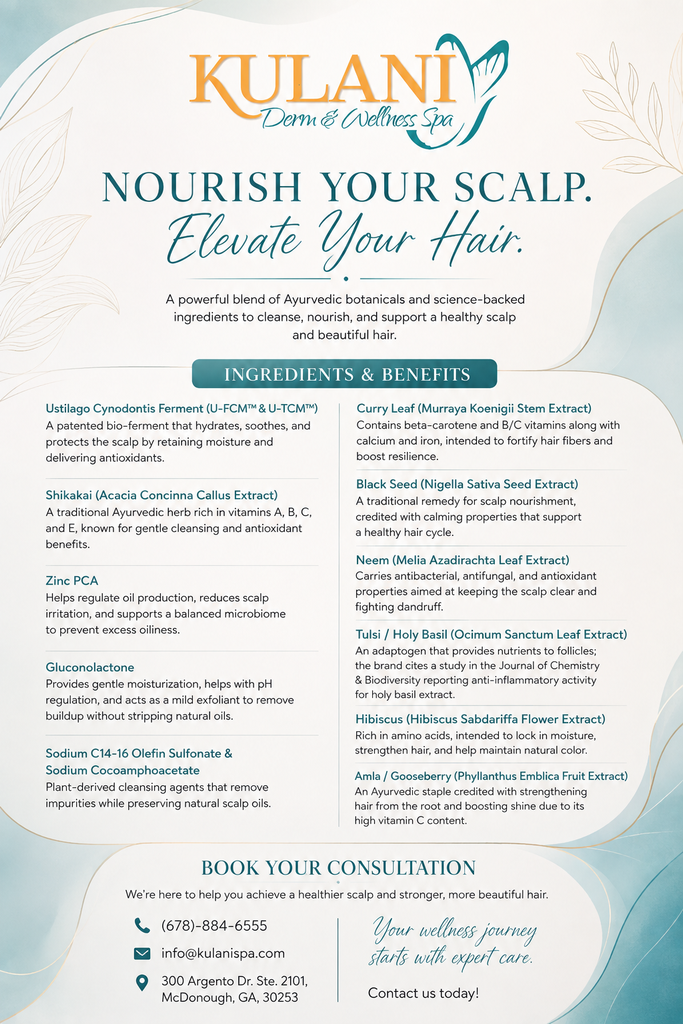
According to the manufacturer, De|Rive is a topical formulation containing plant-derived ingredients described as including exosomes, liposomes, proteins, and growth factors. Independent clinical evidence specific to the De|Rive product is currently more limited.
Rather than drawing your blood, the De|Rive serum is applied topically and driven into the scalp using a specialized in-office device, followed by a take-home serum for daily use over about 30 days.
According to the manufacturer, the formulation is designed around signaling pathways associated with hair-follicle activity. These proposed mechanisms should not be interpreted as evidence that De|Rive produces hair regrowth in humans.
De|Rive Ingredients
The formulations are built on a patented process that cultivates a proprietary blend of organic plant stem cells, rich in exosomes, liposomes, proteins, and growth factors that are meant to work with the body’s natural renewal processes.
PRP Microneedling vs. De|Rive. How Do They Compare?
| PRP Microneedling | De|Rive Hair Restoration | |
| Source of growth factors | Your own blood (autologous) | Plant-derived exosomes |
| Needles involved | Yes (fine microneedling) | Typically needle-free |
| Blood draw required | Yes | No |
| Downtime | Minimal | Minimal to none |
| At-home component | No | Yes, 30-day hair support serum |
| Suitable for | Depends on individual evaluation and treatment goals | Depends on individual evaluation and treatment goals |
Hair growth occurs in cycles, and any changes in shedding, density, or thickness may take time to become noticeable. Treatment schedules vary according to the therapy, the underlying cause of hair loss, and the individual’s clinical assessment.
Results Timeline: What to Expect, Week by Week
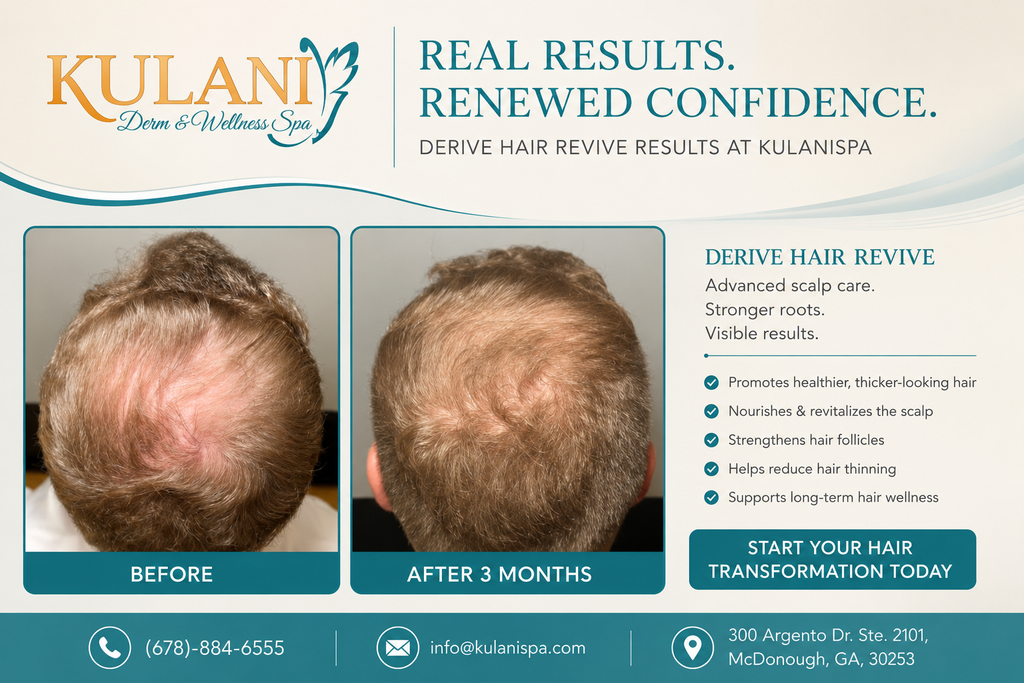
Hair-restoration treatments do not produce immediate results. Any changes in shedding, hair density, or thickness generally develop gradually and vary between individuals.
- Immediately after treatment: Temporary redness, tenderness or scalp sensitivity may occur depending on the treatment used.
- First several weeks: The scalp continues to recover. Changes in shedding or hair appearance may not be noticeable immediately.
- Following months: Any improvement in hair density or thickness develops gradually and varies between individuals.
- Long-term: Maintenance may be recommended depending on the treatment and the individual’s response.
Who should be cautious or avoid these treatments:
- Active scalp infections or skin conditions at the treatment site
- Blood clotting disorders or use of blood-thinning medication (for PRP specifically)
- Certain autoimmune conditions
- Pregnancy (check with your provider)
Always disclose your full medical history during consultation; a licensed provider will screen for contraindications before treatment.
What to Look for When Searching “PRP for Hair Loss Near Me”
When you are looking for where to get PRP, always make sure that you are getting your treatment from:
- A licensed medical provider
- A sterile, single-use kit to centrifuge
- A consultation
- Transparent pricing
Kulani Spa offers PRP microneedling and De|Rive hair restoration, so you’re not stuck guessing which treatment fits your specific type of thinning. Get your consultation and book your treatment.
FAQs
- Is PRP microneedling painful? Most patients describe mild pressure, tingling, or light scratching rather than sharp pain, especially with topical numbing applied beforehand. Downtime is minimal: light redness for a day or two at most.
- How is De|Rive different from PRP? De|Rive uses plant-derived exosomes applied topically, with no blood draw required, while PRP uses growth factors concentrated from your own blood. Both can be paired with microneedling, and some patients use both treatments as part of a broader regrowth protocol.
- Can PRP microneedling regrow hair in areas that have been completely bald for years? Evidence to improve long-standing bald areas is limited, and outcomes depend on the individual’s underlying cause and condition of the hair follicles. A qualified provider can assess whether treatment may be appropriate.
- Can I use Minoxidil with PRP microneedling? Whether you should combine them depends on your diagnosis, medical history, medications, and treatment plan. Always consult a health-care professional before adding anything to your treatment plan.
Interested in learning about your hair-loss treatment options?
Book a Hair-Loss Consultation at Kulani Spa
A qualified provider can discuss your hair-loss pattern, treatment options, potential benefits and limitations, and whether PRP, De|Rive or another approach may be appropriate for you.
(678)-884-6555
300 Argento Dr. Ste. 2101, McDonough, GA, 30253
Written by: Dr. Nimra — Medical Content Writer
Medically reviewed by: Sabina Gordon, FNP-C, APRN, MSN
Last reviewed: August 2026
Medical review scope: Hair-loss treatment information and patient safety considerations
References
- Nilforoushzadeh, M.A. et al. (2025). Phase I Clinical Trial: Evaluating the Efficacy, Safety, and Patient Satisfaction of PRP Injections and Microneedling for Androgenetic Alopecia Treatment. Journal of Cosmetic Dermatology.
- Comparison of Efficacy of Platelet-Rich Plasma (PRP) With PRP Microneedling in Androgenetic Alopecia. Pak-Emirates Military Hospital, Rawalpindi. PMC.
- Patient Satisfaction and Clinical Effects of Platelet-Rich Plasma on Pattern Hair Loss in Male and Female Patients. PMC.
- Microneedling and Its Use in Hair Loss Disorders: A Systematic Review. Dermatology and Therapy, Springer Nature.
- Clinical Efficacy and Mechanisms of Microneedling Alone or Combined With Drugs in the Treatment of Androgenetic Alopecia. PMC.
